How Attractive Am I? What Tests Can and Can't Tell You
No test can give you a true attractiveness number. Tests and apps estimate how one photo compares with ratings from a group of people, and real attractiveness is part shared taste, part personal.
By the Beautify team6 min read
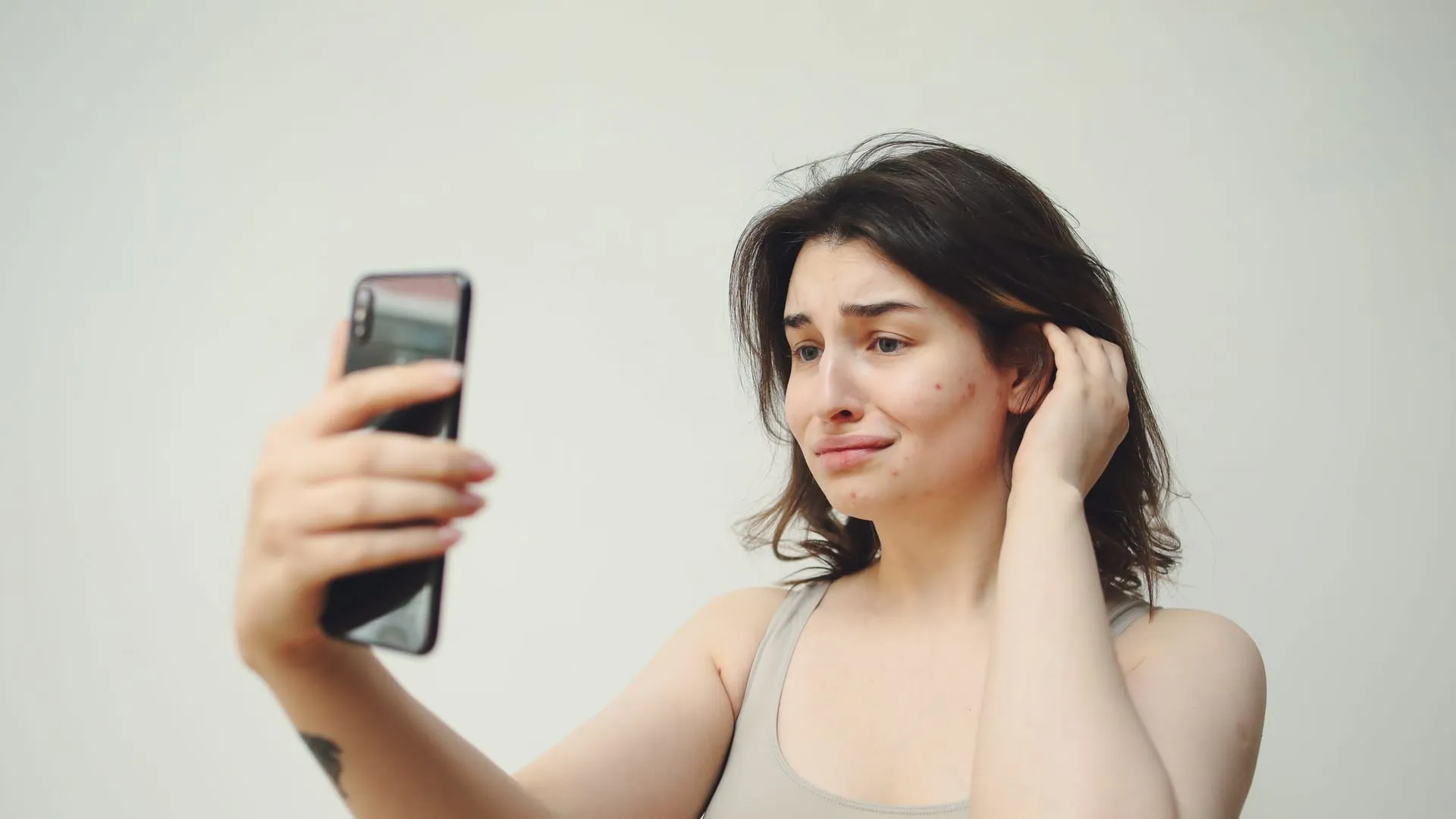
No quiz, app or chatbot can tell you how attractive you are in any fixed sense. What they can tell you is how one photo of you compares with the preferences built into that tool, and that is a much smaller claim. Different photos, different raters and different methods give different answers, and none of them sees you the way people who know you do.
This post is for adults who have searched “how attractive am I” and want an honest answer about what these tests measure. It covers what attractiveness research says, why a single photo is a weak sample, how your view of your own face differs from other people’s, and how to use a score as a tool rather than a verdict.
How attractive am I, really?
There is no single true answer, because attractiveness is part shared taste and part personal taste. People agree on some things, but they also disagree a lot, so “how attractive am I” always depends on who is looking.
A large twin study published in Current Biology in 2015 by Germine and colleagues measured this directly. Participants rated the same set of faces, and the researchers found that 48 percent of the variation in ratings came from preferences people shared, while 52 percent came from individual preferences. Those individual preferences were shaped mostly by each person’s own experiences, not by genes.
In plain terms: roughly half of how attractive someone finds a face is about that particular viewer. A score that claims to be your attractiveness “out of 10” is averaging over that disagreement.
What do online attractiveness tests actually measure?
Online attractiveness tests measure how a photo of your face compares with a reference: a set of rules, a model trained on human ratings, or a language model’s general sense of what people find attractive. They do not measure your face directly, and they do not measure how attractive people find you.
| Type of test | What it is based on | What it can’t tell you |
|---|---|---|
| Quiz (“how attractive am I quiz”) | Your answers to questions | Anything about your actual face |
| Proportion or “golden ratio” calculator | Distances between landmarks compared with a fixed ideal | Whether that ideal matches what people prefer (evidence for the golden ratio is weak) |
| AI face rating app | A model trained to predict ratings from a set of raters | How other groups of people would rate you, or how you look in person |
| ChatGPT or another chatbot | A general model’s description of a photo | A calibrated, repeatable score |
Our best face rating apps list compares the apps, and can ChatGPT rate your face? covers chatbots. The common limit is that every one of them reads a single image.
Why is one photo a weak sample?
One photo is a weak sample because different photos of the same person can look as different as photos of different people. Camera distance, light, angle and expression change the image, and the image is all a test sees.
A 2014 study by Todorov and Porter in Psychological Science showed this. Participants rated several photos of each person on traits including attractiveness, and the variation between photos of the same person was comparable to, or larger than, the variation between different people. The researchers also found that people choose different photos of the same person depending on context, such as a dating profile versus a political campaign.
If one test gives you a 6 and another an 8, both can be “right” about the photo they saw and still tell you little about your face. Our explainer on why you look different in photos goes through the causes.
Do people judge their own photos differently from others?
Yes. Research suggests you see your own face a little differently from how others do, and you are not always the best judge of your own photos.
- You recognize a flattered version as you. In a 2008 study, Epley and Whitchurch morphed participants’ photos to be more or less attractive. Participants were more likely to pick an attractively enhanced version of their face as their own, and they found it faster in a lineup. They showed the same bias for a friend’s face, but not for a stranger’s.
- Strangers pick photos that make better impressions. In a 2017 study of 610 people, White, Sutherland and Burton found that profile photos chosen by strangers created more favorable first impressions overall than photos people chose for themselves, although the difference for attractiveness ratings alone was not significant.
So a photo that disappoints you may not disappoint anyone else, and a photo you love may not be the one that works best. Asking a friend is often more useful than asking a test.
What do people notice beyond your face?
People who know you judge your looks through everything else they know about you. Attractiveness in real life is not read from a still photo of your face; it includes how you move, talk, dress and treat people.
Kniffin and Wilson showed this in three studies published in Evolution and Human Behavior in 2004, described in a University of Wisconsin-Madison release. On a college sports team, teammates rated a well-liked leader as physically attractive and a teammate who did not pull his weight as unattractive, while strangers looking only at photos rated the two as equally attractive. Liking, respect and contribution to a shared goal “had a large effect on the perception of physical attractiveness that was invisible to the strangers.”
No test that reads a selfie can see any of that.
Can a test tell me if I’m ugly?
No. A low score means one photo did not match one tool’s reference, not that you are ugly. Given that roughly half of attractiveness judgments come down to individual taste, and that the people who know you rate you through your character, a number from a single image is a narrow reading.
If you are asking because you feel bad about your appearance, the most useful next step is rarely another test. Look at what is in your control and makes you feel good (sleep, skin care, a haircut that suits your face shape, clothes that fit, good light in photos), and talk to someone you trust if the worry sticks around.
How should you use an attractiveness score?
Use an attractiveness score as a rough, photo-dependent reading, and pay more attention to the practical suggestions that come with it than to the number. A score is most useful when you compare like with like and act on specifics.
- Take the photo the same way every time: front-facing, soft even light, camera at eye level from arm’s length or more, neutral expression. See how to take a good selfie.
- Look past the overall number. Feature-level notes (skin, face shape, eye shape) point to things you can try, like a skincare routine or a haircut.
- Do not chase the score. Retaking the same photo until the number rises measures your persistence, not your face.
- Stop if it makes you feel worse. A tool that leaves you anxious is not doing its job.
Where does Beautify fit?
Beautify is an iPhone app that gives eight scores out of 100 from one selfie: overall, potential, skin quality, facial symmetry, eyes, nose, lips and cheekbones. Like every test on this page, it reads one photo, so its scores are estimates, not a measure of your worth. Where it goes further is context: your face shape, eye shape and skin type with tips for each (haircuts, eye makeup, a morning and evening skin routine) and a glow-up guide covering skincare, hair, fitness, sleep and nutrition. For an honest second opinion on how you come across, a trusted friend picking your best photo is free and often more useful.
What matters most?
- No test can give you a true attractiveness number; about half of attractiveness judgments are individual taste.
- Tests read one photo, and photos of the same person vary as much as photos of different people.
- You are not the best judge of your own photos, and people who like you tend to see you more kindly than a camera does.
- Use scores for consistent comparisons and practical tips, never as a verdict on your worth.
Questions people ask
Is there an objective way to measure attractiveness?
No. Attractiveness is a judgment people make, not a physical quantity like height. Some features are broadly preferred, but research also finds large personal differences in taste, so any score reflects whose ratings it was built on.
Why do different attractiveness tests give me different scores?
Each test uses its own method, its own training data and its own scale, and each reads a different photo. Changes in camera distance, light, angle and expression alone can move a score, before you even switch apps.
What should I do if an attractiveness test made me feel bad?
Treat the result as a reading of one photo by one piece of software, and step away from it. If worries about your appearance keep coming back or affect your day, talk to someone you trust or a doctor.
Sources
- Germine and colleagues, Individual Aesthetic Preferences for Faces Are Shaped Mostly by Environments, Not Genes (Current Biology, 2015)
- Todorov and Porter, Misleading First Impressions: Different for Different Facial Images of the Same Person (Psychological Science, 2014)
- Epley and Whitchurch, Mirror, Mirror on the Wall: Enhancement in Self-Recognition (Personality and Social Psychology Bulletin, 2008)
- White, Sutherland and Burton, Choosing Face: The Curse of Self in Profile Image Selection (Cognitive Research: Principles and Implications, 2017)
- University of Wisconsin-Madison, Physical beauty involves more than good looks (on Kniffin and Wilson, Evolution and Human Behavior, 2004)