What Makes a Face Attractive? What the Research Says
Research points to averageness, symmetry, even skin and, in women's faces, femininity. Each has a real but modest effect, the golden ratio has little support, and personal taste matters as much.
By the Beautify team7 min read
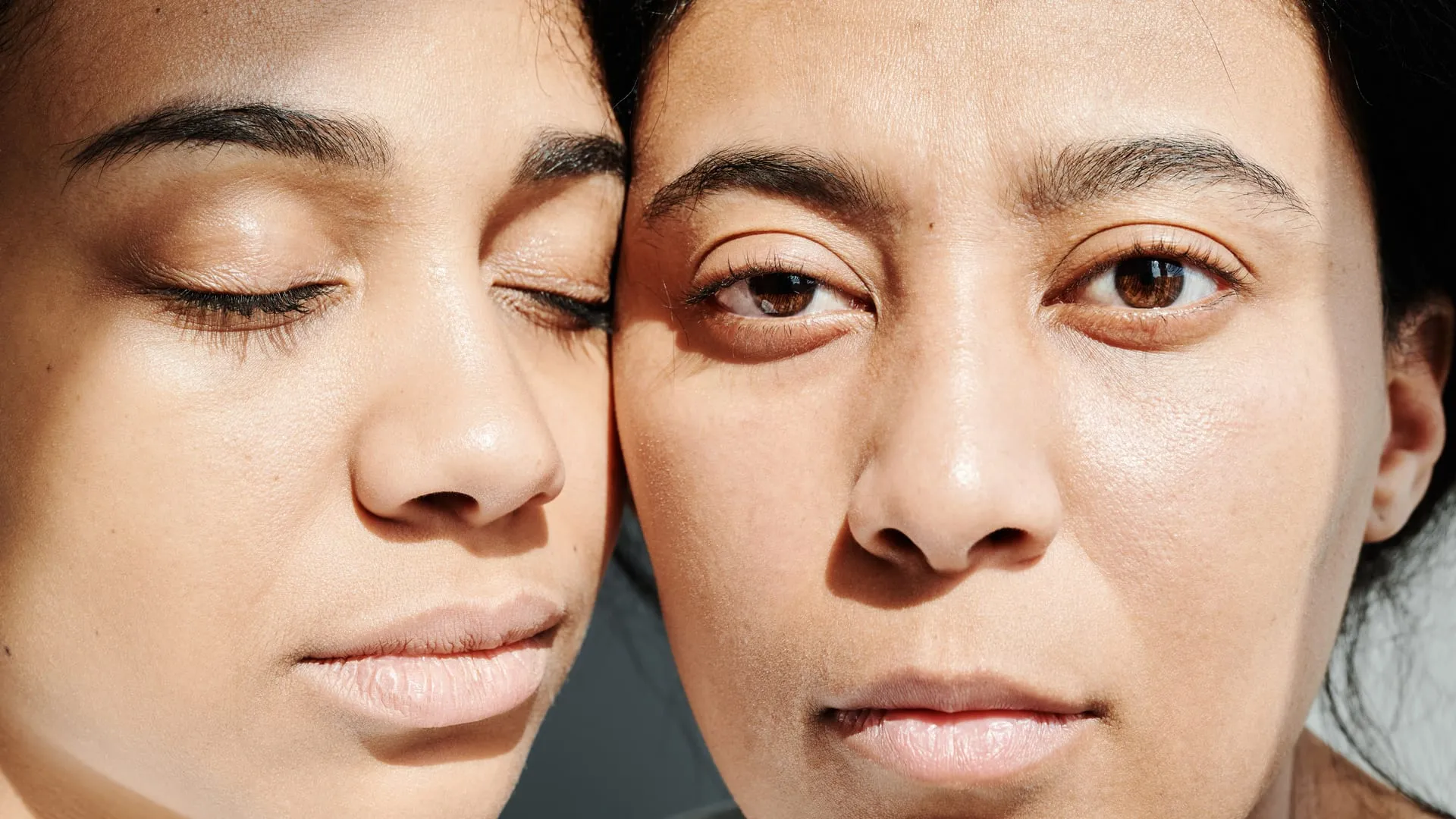
Decades of research agree on a short list: faces close to the population average, faces that are fairly symmetrical, faces with even skin tone, and (most clearly for women’s faces) faces with sex-typical features tend to be rated more attractive. The effects are real, measurable and found across cultures. They are also smaller and messier than popular claims suggest, and they explain only part of why one person finds another attractive.
This post is for anyone who wants the evidence rather than the myths. It goes through each factor with the study behind it, says how strong the evidence is, and covers what the research does not support, including the golden ratio.
What makes a face attractive?
A face tends to be rated attractive when it is close to the average face of a population, fairly symmetrical, has even skin, and has features typical of its sex, especially femininity in women’s faces. Those are the factors with the most evidence. Expression, familiarity and the viewer’s personal taste also play a part.
| Factor | What research finds | Strength of evidence |
|---|---|---|
| Averageness | Faces close to the population average are rated more attractive | Strong, found across many studies |
| Symmetry | More symmetrical faces are rated somewhat more attractive | Consistent, but a smaller effect in real faces |
| Even skin tone | Even skin color reads as younger, healthier and more attractive | Good experimental evidence, in women’s faces |
| Femininity (women’s faces) | Feminine features are strongly preferred | Strong |
| Masculinity (men’s faces) | Preferred in real photos, often not in manipulated ones | Mixed |
| Golden ratio | No special link to beauty | Little support |
| Personal taste | About half of rating differences are individual | Strong, from a large twin study |
Why are average faces attractive?
Average faces are attractive because a face close to the typical shape for a population is consistently rated above most individual faces. “Average” here means mathematically averaged features, not ordinary-looking.
The landmark study is Langlois and Roggman (1990) in Psychological Science. They digitally blended photos of faces into composites and asked adults to rate them. The composites were judged more attractive than almost all of the individual faces that went into them, and the composites became more attractive as more faces were added.
Two explanations are offered. One is evolutionary: features near the population mean may have been favored over time. The other is cognitive: the brain tends to favor prototypes, the most typical member of a category, and an average face is the prototype of “a face.” This is also where familiarity comes in, since a typical-looking face is in a sense a familiar one.
A 2006 review in the Annual Review of Psychology by Gillian Rhodes, which pooled results in meta-analyses, found a large effect of averageness overall and a medium effect in real, unmanipulated faces.
Does facial symmetry make a face attractive?
Yes, symmetry makes a face somewhat more attractive, but its effect is smaller than averageness, and nobody’s face is perfectly symmetrical. Rhodes’s meta-analysis found that symmetry is attractive and that it adds to attractiveness independently of averageness.
How symmetry is tested matters. Early studies made “perfect” faces by mirroring one half of a face, and those looked odd and were rated less attractive. Later studies blended a face with its own mirror image, which keeps natural proportions, and those symmetrical versions were preferred. In ordinary photos, natural variation in symmetry has a smaller, small-to-medium link with attractiveness. Our post on facial symmetry covers how symmetrical most faces are and why photos exaggerate the differences.
How much does skin matter?
Skin matters: in research on women’s faces, an even skin tone made a face look younger, healthier and more attractive, independent of its shape. It is also one of the factors most within your control.
Fink, Grammer and Matts (2006), in Evolution and Human Behavior, used 3D images of women’s faces standardized to the same shape, varying only the skin color distribution, which differed with age and accumulated sun damage. Faces with the even skin color distribution typical of younger skin were judged younger and received higher ratings for attractiveness and health than the same faces with uneven color.
In practical terms, uneven tone from sun damage, redness or dark spots changes how a face reads. That is the cosmetic case for a consistent skin care routine and daily sunscreen, since evening out tone is what many of those products are for. Patch test new products, and see a dermatologist for anything persistent.
Do feminine and masculine features matter?
Feminine features clearly add to the attractiveness of women’s faces, while the picture for masculine features in men’s faces is mixed. Rhodes’s review found femininity strongly attractive in female faces, a preference that held for the Caucasian, Asian and Jamaican faces studied. Examples of feminine traits include a smaller chin, fuller lips and higher cheekbones.
For men’s faces, masculinity correlated with attractiveness in real photos, but in experiments where faces were digitally made more or less masculine, people often preferred the less masculine versions. One reading is that moderate masculinity is preferred over extreme masculinity. Personal taste varies a lot here.
Does the golden ratio make a face beautiful?
No, there is little evidence that the golden ratio (about 1.618) makes a face beautiful. It is a popular claim in apps and online “beauty calculators,” but research does not back it.
Pallett, Link and Lee (2010), in Vision Research, note that there is “little support for the golden ratio.” They tested which feature spacing made the same faces most attractive and found an optimum when the distance from eyes to mouth was about 36 percent of the face’s length and the distance between the eyes was about 46 percent of its width. Those “new golden ratios” match an average face, which brings us back to averageness. The authors also note that hairstyle can change the perceived length and width of a face, and with it these ratios, which is why a haircut that suits your face shape can change how balanced a face looks.
Is beauty in the eye of the beholder?
Partly. People broadly agree on which faces are attractive, both within and across cultures, but they also disagree a lot, and about half of the differences in face ratings come from individual taste.
Rhodes’s review notes that people in different cultures generally agree on which faces are attractive, although some studies find weaker agreement, and that these preferences appear early in development, before cultural standards are likely to be learned. At the same time, beautification practices (makeup, hair, adornment) differ widely between cultures, as Darwin himself observed.
A twin study by Germine and colleagues (2015) in Current Biology put a number on the personal side: 48 percent of the variation in face ratings came from shared preferences and 52 percent from individual ones. Individual preferences were shaped mostly by each person’s own environment and experiences, not by genes.
What does the research not tell you?
The research does not tell you how attractive any one person is in daily life. Most of these studies use still, front-facing photos, often with neutral expressions, often from Western samples, and often of faces that were digitally blended or altered.
Real attraction includes things those studies leave out: expression and movement, voice, personality, style, and how well people know you. A warm, relaxed expression changes how a face comes across, and still photos are a narrow view of a face (our post on why you look different in photos explains why). Any app or test that scores attractiveness inherits these limits; see how attractive am I? for what a score can and cannot tell you.
Where does Beautify fit?
Beautify is an iPhone app whose facial analysis reads one selfie and returns eight scores out of 100, including skin quality and facial symmetry, two of the factors in this post, plus eyes, nose, lips and cheekbones. It also identifies your face shape, eye shape and skin type, with haircut and makeup placement tips for your face shape and a morning and evening routine for your skin type. The scores are estimates from one photo, not a measure of the research factors above or of your worth. For skin concerns specifically, a dermatologist is the better source, and for a free symmetry check, a straight-on photo and a ruler work.
What matters most?
- Averageness has the strongest evidence, and even skin has good experimental support; symmetry matters, but less in real faces than people assume.
- Femininity is clearly attractive in women’s faces; the evidence on masculinity in men’s faces is mixed.
- The golden ratio has little support; the “ideal” proportions researchers found match an average face.
- About half of attractiveness is in the eye of the beholder.
- Skin care, hair and expression are the parts most within your control.
Questions people ask
What makes a female face attractive?
Research links attractiveness in women's faces most strongly to feminine features (such as a smaller chin and fuller lips), closeness to the average face, symmetry and even skin tone. These are tendencies across many raters, and individual taste varies widely.
What makes a male face attractive?
The evidence for men's faces is more mixed. Averageness and symmetry are attractive, and masculine features are rated attractive in real photos, but in experiments where masculinity is dialed up or down, people often prefer the less masculine version, which points to moderate rather than extreme masculinity.
Can you make your face more attractive without surgery?
Many of the factors in this research respond to everyday choices: skin care for a more even tone, a haircut that balances your face shape, grooming, good light in photos and a relaxed expression. None of it changes your bone structure, and none of it needs to.
Sources
- Langlois and Roggman, Attractive Faces Are Only Average (Psychological Science, 1990)
- Rhodes, The Evolutionary Psychology of Facial Beauty (Annual Review of Psychology, 2006)
- Fink, Grammer and Matts, Visible Skin Color Distribution Plays a Role in the Perception of Age, Attractiveness, and Health in Female Faces (Evolution and Human Behavior, 2006)
- Pallett, Link and Lee, New "Golden" Ratios for Facial Beauty (Vision Research, 2010)
- Germine and colleagues, Individual Aesthetic Preferences for Faces Are Shaped Mostly by Environments, Not Genes (Current Biology, 2015)