Why Do I Look Different in Photos Than in the Mirror?
A mirror shows you flipped, in your own light, moving and at a flattering distance. A photo is unflipped, frozen and often shot close up, and you are used to the mirror version.
By the Beautify team7 min read
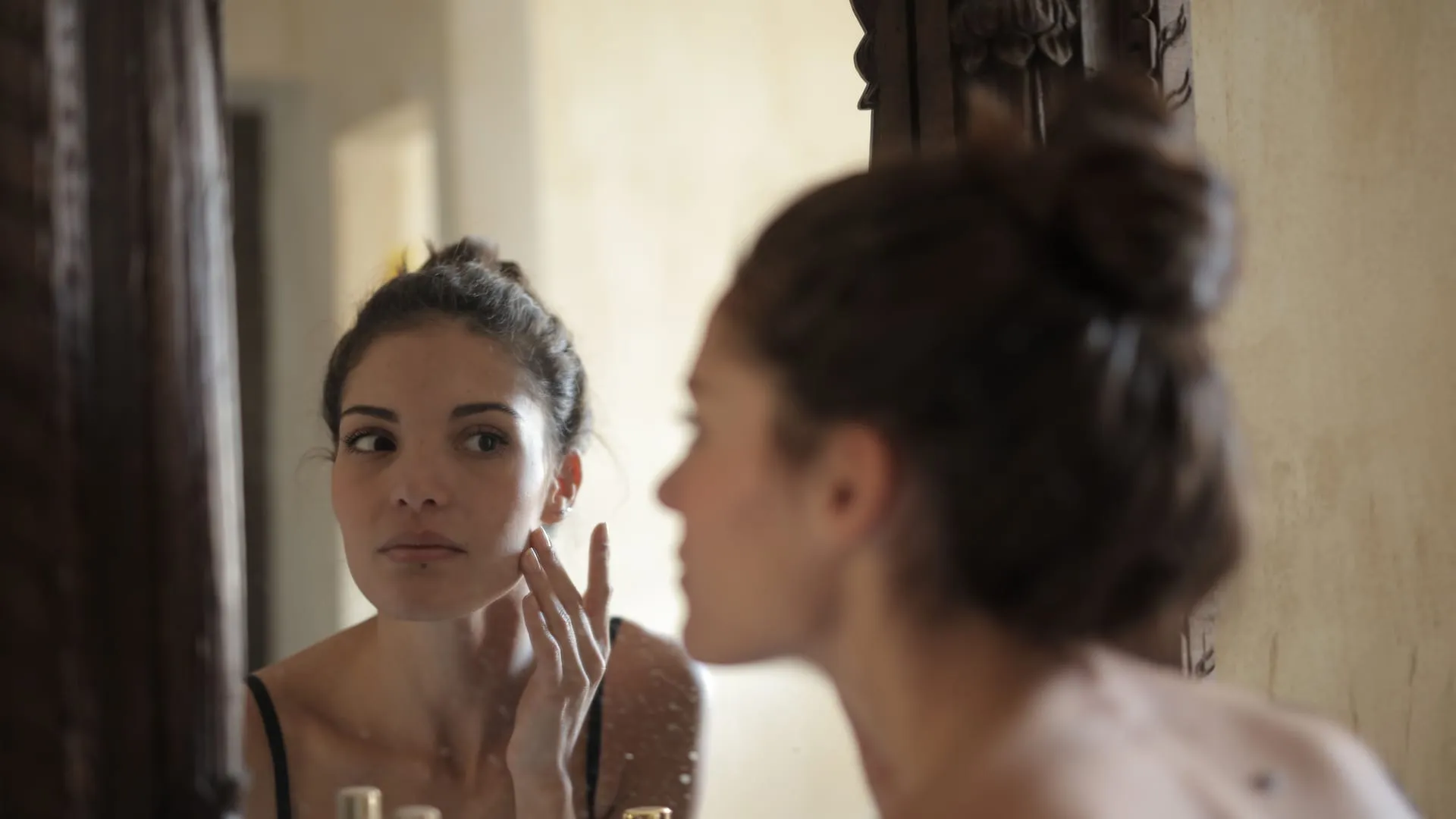
You look different in photos because a photo is a different view of your face, not because the photo has revealed the “real” you. The mirror flips you, a camera held close changes your proportions, and a still image freezes a moment that nobody sees in person. On top of that, you have spent years looking at the mirror version, and familiarity makes it feel right.
This is for anyone who has winced at a tagged photo or a selfie that looked off. Below are the five main reasons, with the research behind each, and what you can do so photos look more like the face you know.
Why do I look different in photos than in the mirror?
You look different in photos than in the mirror because of five things: the mirror reverses left and right, you prefer the version you see most, close-range cameras distort proportions, lighting changes from place to place, and a photo freezes a single moment. Each one is small; together they can make a photo look like a stranger.
| Mirror | Photo | |
|---|---|---|
| Orientation | Reversed left to right | Unreversed (how others see you) |
| Familiarity | The version you see daily | A version you rarely see |
| Distance | Your reflection appears twice as far away as the mirror | Arm’s length or closer for a selfie |
| Light | Usually the same room and light | Anything: flash, overhead, backlight |
| Motion | Moving, with live expressions | One frozen instant |
Why does my mirror image look better to me?
Your mirror image looks better to you because it is the version of your face you have seen most often, and people tend to like what is familiar. Psychologists call this the mere-exposure effect.
The classic test is a 1977 study by Mita, Dermer and Knight in the Journal of Personality and Social Psychology. The researchers printed photos of participants two ways, as a true image and as a mirror image. Participants preferred the mirror image of their own face, while their friends preferred the true image: each group preferred the version they were used to seeing.
Faces are never perfectly symmetrical, so flipping one moves every small difference to the other side: a parting, a higher eyebrow, a crooked smile, a mole. In the mirror those details sit where you expect them. In a photo they sit on the “wrong” side, and your brain registers that something is off even if you cannot say what. Our post on facial symmetry explains how asymmetrical most faces are.
Do cameras distort your face?
Yes: a camera held close to your face enlarges the features nearest the lens, especially the nose, and shrinks the features farther away, such as the ears and the sides of the face. The camera is not faulty; it is perspective.
A 2018 model in JAMA Facial Plastic Surgery by Ward and colleagues at Rutgers and Stanford showed how large the effect is. A selfie taken 12 inches from the face made the nose about 30 percent wider relative to the face (30 percent in men, 29 percent in women) than an undistorted view. At 5 feet, a standard portrait distance, there was essentially no difference.
A mirror does not do this in the same way. Your reflection appears as far behind the glass as you are in front of it, so at 2 feet from the mirror you are looking at your face from about 4 feet away. You also see the mirror with two eyes, which gives depth that a flat photo lacks. That is one reason a close-up selfie can look wider and flatter than your reflection.
How does lighting change how you look?
Lighting changes how you look by moving shadows, and shadows are how we read the shape of a face. Light from above deepens the hollows under the eyes and cheekbones; light from the front fills them in; light from behind darkens the whole face.
You check your mirror in the same few rooms, under light you are used to. Photos are taken anywhere: under restaurant downlights, in flat flash, against a bright window. The same face can look tired, rested, older or younger depending only on where the light comes from.
Why do I look worse in photos than in real life?
You may look worse in photos than in person because a photo freezes one instant, while people see your face moving. In motion, a half-blink or an expression caught mid-word is gone before anyone registers it. In a still, it is all there is.
Research supports the idea that moving and still faces are judged differently. A 2005 study in Psychological Science by Rubenstein found that dynamic and static faces were judged by different standards, and that perceived emotion may matter more when judging the attractiveness of a moving face than a still one. Expression, warmth and animation carry a lot of how people see you, and a photo captures little of that.
The specific frame also matters. A 2014 study by Todorov and Porter found that different photos of the same person could produce impressions as different as photos of different people, for traits including attractiveness. One bad frame is just one bad frame.
Do you see yourself as better looking than you are?
Partly, yes: research suggests people’s sense of their own face leans slightly flattering, which can make an honest photo feel worse. In a 2008 study, Epley and Whitchurch morphed participants’ photos to be more or less attractive. Participants were more likely to pick the attractively enhanced version as their own face, and found it faster in a lineup.
This is not vanity. It is a normal, automatic bias, and the same study found it for a friend’s face too, but not for a stranger’s. The people who like you see you a little more kindly as well.
Which is the real you, the mirror or the photo?
Neither is the full picture, but a photo taken from a few feet away in good light is closer to how others see you than the mirror is. Other people see you unflipped, from conversational distance, moving and lit by whatever is around. A close-up selfie is less like that view than a well-taken photo from 4 or 5 feet.
How can you look more like yourself in photos?
You can look more like yourself in photos by fixing the variables that cause the gap:
- Step back. Use a timer or ask someone to shoot from a few feet away, zoomed in slightly.
- Face the light. Daylight from a window in front of you is the most forgiving.
- Take a burst. Pick a frame where your expression has finished forming.
- Flip it if you prefer. On iPhone, Settings > Camera > Mirror Front Camera saves selfies as the preview shows them.
- Get a second opinion. Friends are used to the unflipped you, so the photo they pick may be closer to how you come across.
Our guide on how to take a good selfie covers each of these in detail.
Why do face rating results change from photo to photo?
Face rating results change from photo to photo for the same reasons you look different: distance, lighting, angle and expression change the image the app reads. An app that scores proportions will see a wider nose in a close selfie and deeper shadows under overhead light. That is why we recommend taking every scan in the same setup, and why our page on whether face rating apps are accurate treats any score as a reading of one photo, not a fact about your face.
Where does Beautify fit?
Beautify is an iPhone app that analyzes one selfie, so it is affected by everything in this post, and it asks for a photo that keeps those effects small: face straight and centered, looking at the camera, mouth naturally closed, good light without harsh shadows and nothing covering your face. It returns eight scores out of 100, your face shape, eye shape and skin type with tips for each, and a glow-up guide, and keeps past results in the Scans tab. The scores are estimates from that one photo. If what you want is to understand why a photo looked off, the free test works best: take one selfie at arm’s length and one from 5 feet on a timer, and compare.
What matters most?
- Most photos are unflipped, while the mirror shows you reversed, so photos can look “off” through unfamiliarity alone.
- Close-range cameras widen the center of the face; a few feet of distance removes most of the effect.
- Light and the frozen moment change a face more than most people expect.
- Your own view of your face is slightly kinder than reality, and so is the view of people who like you.
- One bad photo is one bad photo, not the truth about your face.
Questions people ask
Why do I look different in photos and videos?
A video shows your face moving, with expressions that change and resolve, which is how people see you in person. A photo freezes one fraction of a second, which can catch a half-blink or half-formed expression that nobody would notice in motion.
Why do I look different in every photo?
Each photo combines a different distance, lens, light and expression, and each of those changes how a face reads. Research by Todorov and Porter found that different photos of the same person can vary as much in impressions as photos of different people.
Do other people see my face flipped?
No. Other people see you unflipped, the way an unmirrored photo shows you. You see the reversed version in the mirror (and in the selfie camera preview), which is why it is the version you are most used to.
Why do I look better in photos than in the mirror?
Some people do, usually because the photo had better light than their bathroom mirror, was taken from a flattering distance and angle, or caught a relaxed expression. Bathroom lighting directly overhead is often less kind than daylight.
Sources
- Mita, Dermer and Knight, Reversed Facial Images and the Mere-Exposure Hypothesis (Journal of Personality and Social Psychology, 1977)
- Ward, Ward, Fried and Paskhover, Nasal Distortion in Short-Distance Photographs: The Selfie Effect (JAMA Facial Plastic Surgery, 2018)
- Todorov and Porter, Misleading First Impressions: Different for Different Facial Images of the Same Person (Psychological Science, 2014)
- Rubenstein, Variation in Perceived Attractiveness: Differences Between Dynamic and Static Faces (Psychological Science, 2005)
- Epley and Whitchurch, Mirror, Mirror on the Wall: Enhancement in Self-Recognition (Personality and Social Psychology Bulletin, 2008)