Upturned vs Downturned Eyes: How to Tell and What Suits Each
Upturned eyes have outer corners that sit above a line through the middle of the eye; downturned eyes have outer corners below it. Neither is better, and makeup can lift, level or soften either.
By the Beautify team6 min read
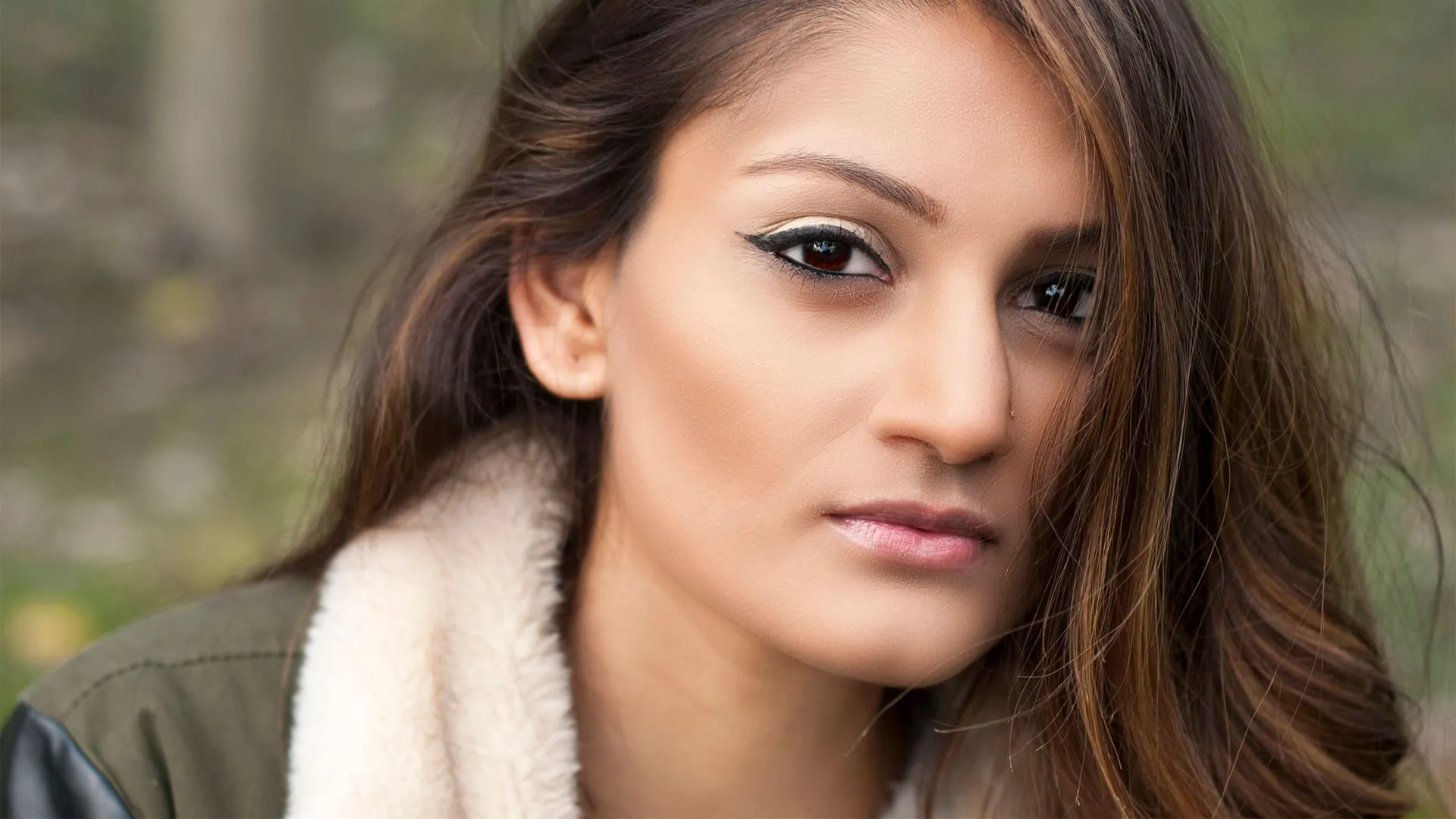
The quickest way to tell upturned from downturned eyes is to look at the outer corners. If they lift toward your temples, your eyes are upturned. If they dip below the level of the inner corners, they are downturned. If they sit level, your eyes are neither, and almond or round is probably the better description.
Neither shape is more attractive, more feminine or more “correct.” They simply ask for slightly different makeup. This guide shows how to check your eyes with the midline test, how the two shapes relate to canthal tilt, and the liner, shadow and mascara placement that suits each.
How do you tell if your eyes are upturned or downturned?
You tell by drawing an imaginary horizontal line through the middle of your eye and checking whether the outer corner sits above it (upturned), below it (downturned) or on it (neither).
This is often called the midline test. Sara Wren, director of artistry at Milk Makeup, describes it to Makeup.com as imagining a line through the center of your eye and seeing whether the outer corners turn up.
- Use a mirror or a photo taken straight on, with the camera at eye level and your head level.
- Relax your face. Smiling pushes the lower lids up and makes eyes look more upturned.
- Imagine or draw a horizontal line through the center of your eye, from the inner corner straight across. A pen or a phone’s straight-edge tool held across the photo helps.
- Look at the outer corner, where the upper and lower lids meet:
- Above the line: upturned.
- Below the line: downturned.
- On the line: neutral, so read your shape from other features, such as lid space and roundness.
- Check the lids too. On upturned eyes, the lower lid often looks longer and more prominent. On downturned eyes, Charlotte Tilbury describes the outer corners of the upper lids pulling slightly downward when you look straight ahead.
Do both eyes. It is normal for one side to be a little more lifted than the other.
How do upturned and downturned eyes relate to canthal tilt?
Upturned and downturned are the everyday words for what clinicians call canthal tilt: upturned eyes have a positive tilt, downturned eyes have a negative tilt, and level eyes have a neutral tilt.
Canthal tilt is the angle of the line from the inner corner of the eye (the medial canthus) to the outer corner (the lateral canthus). A slight upward slope is common. The American Academy of Ophthalmology’s EyeWiki describes an upward slope between the corners of up to 3 mm as the ideal for the “almond” eye shape. In other words, a mild upward lift is normal, not a rare trait.
The difference in wording matters. “Canthal tilt” has been pulled into looksmaxxing forums as a score; “upturned” and “downturned” are makeup terms that describe a direction to work with. Same anatomy, much kinder framing.
Is it better to have upturned or downturned eyes?
No. Upturned and downturned eyes are both normal variations in how the eye corners are anchored, and neither one is better.
Upturned eyes tend to read as lifted or feline, and downturned eyes as soft, gentle or dreamy. Both looks are popular in makeup trends, which is why some people use liner to lift their eyes and others draw a “puppy eye” wing that points down on purpose. The goal of the techniques below is choice: you can emphasize your natural direction, balance it, or switch it for a night.
What makeup suits upturned eyes?
Upturned eyes suit makeup that either follows the natural lift with smoky, smudged definition, or balances it by adding weight to the lower lash line.
- Smoke out the outer corners. A smudged pencil line on the upper and lower lash lines, thickest at the outer corner, highlights the natural shape.
- Line the lower lash line. Because the lower lid is often more prominent on upturned eyes, Makeup.com suggests a thin line on the lower waterline and lash line to create balance with the top lid.
- Tightline. Wren recommends tightlining the upper and lower waterlines for definition without making the eye look smaller.
- Keep wings modest. Upturned eyes are, as Wren puts it, almost a naturally winged eye. A small wing drawn from the lower lash line is often enough; a steep wing can look exaggerated.
- Choose a light, lifting mascara. Wren warns that heavy, thick mascara can weigh upturned eyes down. Concentrating mascara on the outer lashes adds a flutter.
- Try siren eyes. The elongated siren look suits upturned eyes naturally. See siren eyes vs doe eyes vs fox eyes.
What makeup suits downturned eyes?
Downturned eyes suit makeup that lifts from the upper lash line at the outer third and keeps the lower outer corner light.
- Lift the liner at the outer third. Charlotte Tilbury’s method: draw a fine line along the lash line until about two thirds of the way across, then thicken it and sweep slightly up and out.
- Map the wing before you draw it. Imagine a line extending up from your outer lower lash line and place a dot where the wing should end, then connect to it. This keeps the flick lifted rather than following the downward curve of the lid.
- Concentrate the darkest shadow on the outer edge of the upper lid and blend it up toward the brow tail, not down.
- Keep the lower outer lash line clean or very soft. Dark liner or shadow under the outer corner traces the downward angle and exaggerates it.
- Focus mascara on the outer corner lashes, brushed up, to add lift.
- Lift the brow tail. A brow tail that ends level with or slightly above where the brow starts supports the eye; a tail that droops adds weight.
How do upturned and downturned eye makeup compare?
The main difference is the lower outer lash line: upturned eyes can take color there, downturned eyes usually look best without it.
| Step | Upturned eyes | Downturned eyes |
|---|---|---|
| Upper liner | Thin, smudged, or a small wing | Thicker on outer third, angled up |
| Lower lash line | Thin line or smudged shadow to balance | Light or bare at the outer corner |
| Darkest shadow | Outer corner, top and bottom | Outer upper lid, blended up |
| Mascara | Lightweight, lifting, outer lashes | Curled hard, focused on outer lashes |
| Trend that suits | Siren eyes, smoky liner | Fox or lifted cat eye |
| To change direction | Add a downward-angled lower wing | Add a lifted wing from the upper lash line |
Do eyes become more downturned with age?
Eyes can look slightly more downturned with age, because the tendon that anchors the outer corner can loosen and the skin and tissue around the eye descend.
EyeWiki notes that canthal tilt can be altered by elongation or instability of the canthal tendons, and that much cosmetic canthoplasty in Western practice is done to address these age-related changes. Upper lid hooding at the outer third also makes the corner look lower, even when the corner itself has not moved; see hooded eyes if that sounds familiar. A lower lid that droops away from the eye, waters constantly or feels irritated is a medical issue, so see an ophthalmologist rather than reaching for liner.
Where does Beautify fit?
Beautify is an iPhone app that reads your eye shape from one selfie and gives eye makeup tips for it, so you get a quick second opinion on whether your eyes are upturned, downturned or another shape. The same scan gives eight scores out of 100, including one for eyes, along with your face shape and skin type. Its AI beauty assistant can answer follow-ups such as how to draw a lifted wing on downturned eyes, and ten step-by-step makeup tutorials cover full looks. The app does not measure canthal tilt in degrees, and it does not do virtual try-on. The midline test with a mirror is free and works just as well for a first answer, and a makeup artist can show you placement in person. The eye shape page compares all seven shapes.
What matters most?
Use the midline test: if your outer corners sit above a line through the middle of your eye, your eyes are upturned; below it, downturned. This is the same thing clinicians call positive or negative canthal tilt, and neither direction is better. Upturned eyes can take liner on the lower lash line and suit soft, smoky definition. Downturned eyes look most lifted with liner angled up from the outer third of the upper lash line and a light, clean lower outer corner.
Questions people ask
What is the difference between upturned eyes and almond eyes?
They are very similar. Almond eyes are longer than they are tall with slightly tapered corners, while upturned eyes have an almond-like outline plus a clear lift at the outer corner. Many people have both.
Can you have one upturned and one downturned eye?
Yes. The two sides of a face are rarely identical, so one outer corner can sit slightly higher than the other. Do the midline test on each eye separately and adjust your liner so the wings end at the same height.
What is a good lash map for downturned eyes?
A common approach is to place the longest lashes just inside the outer corner rather than at the very end, so the extra length lifts the eye instead of pulling the corner down. Ask your lash artist to map it with your eyes open.