What Is Canthal Tilt? Positive, Negative and Neutral Explained
Canthal tilt is the angle of the line from your inner eye corner to your outer corner. Positive means the outer corner sits higher, negative lower, neutral level. All three are normal.
By the Beautify team7 min read
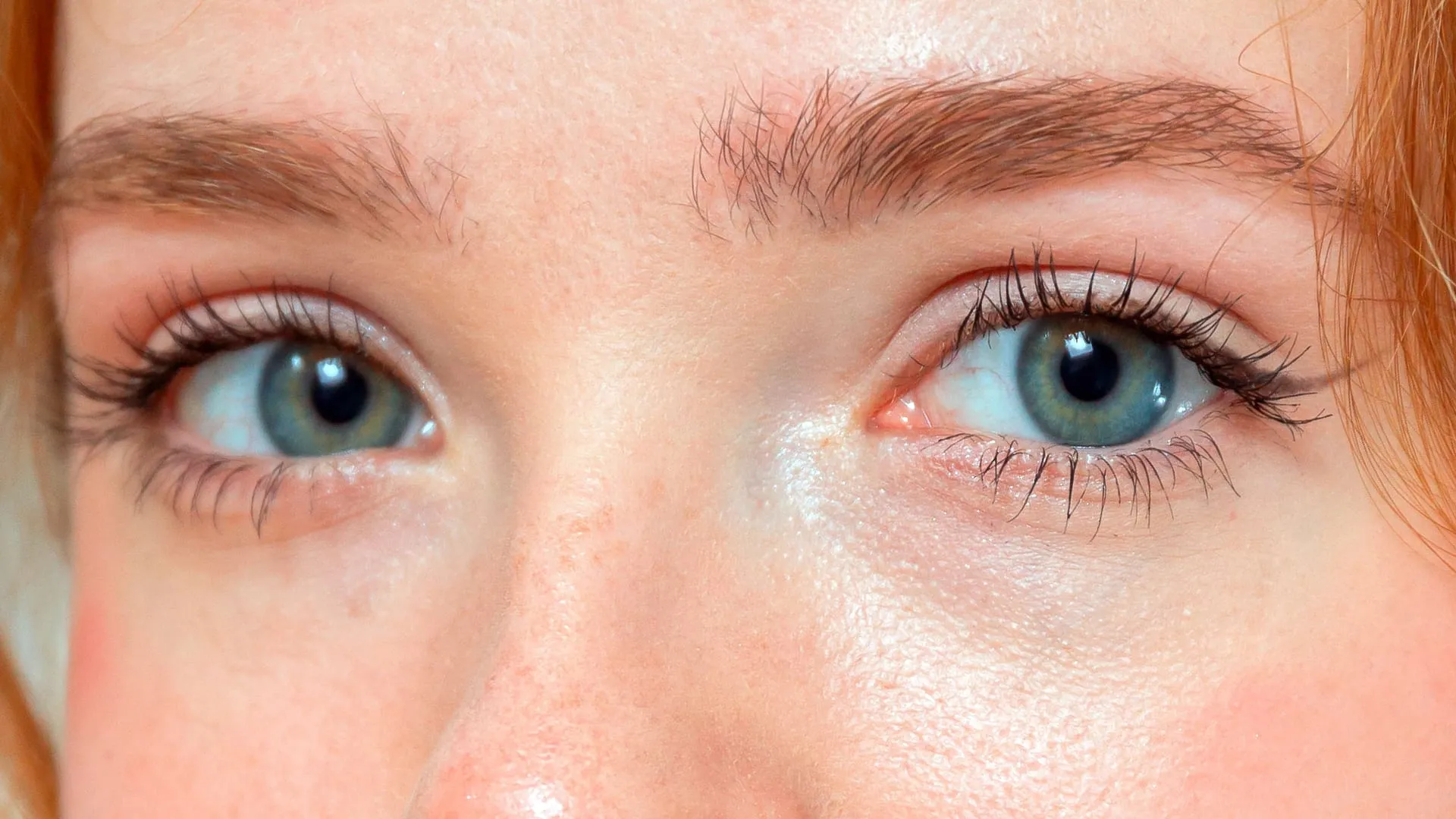
Canthal tilt is simply which way your eyes slant. Draw a line from the inner corner of your eye to the outer corner: if it rises, the tilt is positive; if it falls, it is negative; if it stays level, it is neutral. Most people have a small upward tilt, and every version is a normal human eye.
This post is for anyone who has seen the term on TikTok or in a “canthal tilt test” and wants a plain explanation. It covers the anatomy, how to check your own tilt from a photo, what typical numbers look like in clinical research, why the term became looksmaxxing slang, and how makeup changes the apparent tilt.
What is canthal tilt?
Canthal tilt is the angle between a horizontal line and the line connecting the inner corner of the eye (the medial canthus) to the outer corner (the lateral canthus).
A canthus is the corner where the upper and lower eyelids meet. According to the American Academy of Ophthalmology’s EyeWiki article on canthoplasty, each corner is held in place by a tendon: the lateral canthal tendon anchors the outer corner to a small bump of bone on the inside of the eye socket rim, and the medial canthal tendon anchors the inner corner near the nose. Where those anchor points sit, and how firm the tendons are, decides the angle.
- Positive canthal tilt: the outer corner sits higher than the inner corner. The eye looks lifted, like an upturned or almond eye.
- Neutral canthal tilt: the two corners sit at about the same height. The eye looks level.
- Negative canthal tilt: the outer corner sits lower than the inner corner. The eye looks gently downturned.
In clinical work the angle is measured against the face itself rather than the room. A 2020 study by Lee and colleagues measured it as the angle between the corner-to-corner line and a line perpendicular to the midline of the face, using standardized photographs.
What is a normal canthal tilt?
A slight upward tilt is the most common pattern, with the outer corner sitting a millimeter or a few millimeters above the inner corner.
The numbers below come from clinical sources, and they describe averages and surgical targets, not a pass mark for anyone’s face.
- Oculoplastic guidance: EyeWiki notes that there is ideally an upward slope between the inner and outer corners of up to 3 mm, and cites an aesthetic reference of an outer corner about 4.1 degrees, or 1.2 mm, higher than the inner corner. These figures guide eyelid surgeons planning repairs.
- A measured sample: In the Lee study of 76 young Korean adults photographed at a dental hospital in Seoul, the average tilt was about 8.4 degrees on each side. The authors grouped 0 to 5 degrees as one class and anything above 5 degrees as another; 62 of the 76 participants were above 5 degrees, 14 were between 0 and 5, and none had a negative tilt.
Two cautions matter. That study was small, came from one population and only included people seen for facial asymmetry, so its average is not a universal norm. And there is no agreed clinical cutoff that defines “good” or “bad” tilt; online tests draw their own lines.
How do you check your canthal tilt from a photo?
You check canthal tilt by marking both corners of each eye on a straight-on photo and measuring the angle of the line between them against a level reference line.
- Take the right photo. Hold the camera at eye level and at arm’s length or further (a camera very close to the face distorts features). Face it straight on, keep your head level, relax your face and look into the lens. Do not smile, since smiling pushes the lower lids up and lifts the outer corners.
- Mark the inner corner of one eye: the point where the upper and lower lid margins meet on the nose side, not the pink tissue inside the corner.
- Mark the outer corner: the point where the lids meet on the temple side.
- Draw the reference line. Draw a line through the center of both pupils. This works as your horizontal even if your head is tilted slightly.
- Compare. If the corner-to-corner line rises toward the temple compared with the reference line, the tilt is positive. If it falls, it is negative. Many photo editors have an angle or ruler tool if you want a number.
- Do both eyes. It is common for the two sides to differ by a degree or two.
Repeat with two or three photos. If the answer flips between them, your tilt is close to neutral, and the photo setup is doing most of the work.
Why did canthal tilt become a looksmaxxing term?
Canthal tilt became a looksmaxxing term because online communities focused on rating male attractiveness adopted it as a shorthand for “hunter eyes,” then TikTok turned it into a meme and a filter.
Know Your Meme traces the term on 4chan’s fitness board to at least 2013, through incel and “lookism” forums, to a viral TikTok filter that drew a line across the eyes in July 2023. In those spaces, positive tilt is labeled “hunter eyes” and negative tilt “prey eyes.” Writing in The Conversation in 2024, psychology lecturer Jamilla Rosdahl described how looksmaxxers treat a positive canthal tilt as part of a dominating stare, and linked the wider trend to incel culture.
A medical measurement does not belong on a ranking ladder. Canthal tilt is one small angle among hundreds of features, it varies naturally across families and ethnicities, and plenty of faces people find striking have level or gently downturned eyes. If a test result is making you anxious, that is a sign to step away from the test, not to fix your face.
How does makeup change the apparent canthal tilt?
Makeup cannot move the corners of your eyes, but it changes where the eye seems to end, which shifts the apparent tilt by a few degrees.
To look more lifted:
- Draw a wing that starts at the upper lash line and angles toward the tail of your brow.
- Put your darkest shadow on the outer third of the upper lid and blend it up and out.
- Keep the lower outer lash line light, since dark color there pulls the eye down.
- Concentrate mascara or a half strip of lashes on the outer corner, brushed up.
- Fill the brow tail so it ends level with or slightly above the brow’s start.
To soften a strong upward tilt:
- Smudge a little shadow along the outer lower lash line to balance the lift.
- Use a shorter, horizontal wing or no wing.
- Brighten the inner corner and center of the lid so attention sits in the middle of the eye.
The eye shape guide covers placement for each eye shape, and upturned vs downturned eyes goes deeper on liner for each direction. Looks built around a lifted outer corner, such as siren eyes, do this most dramatically.
Can surgery change canthal tilt?
Surgery can change canthal tilt, but it is a medical decision for an oculoplastic surgeon and a patient, not a beauty step.
Canthoplasty and canthopexy are procedures that reposition or tighten the tendon at the outer corner of the eye. EyeWiki describes them mainly as treatments for eyelid problems, such as a loose or turned-out lower lid, as well as being used cosmetically. They carry real risks, and EyeWiki stresses that surgeons must discuss goals, risks and expected outcomes with patients, and that the right shape depends on the whole face and the person’s own cultural identity. If you are thinking about it, speak to a board-certified oculoplastic surgeon, not a filter.
Where does Beautify fit?
Beautify is an iPhone app that analyzes a straight-on selfie and tells you your eye shape, with eye makeup tips for that shape, which is the practical side of canthal tilt. It also gives eight scores out of 100, including one for eyes and one for facial symmetry. Beautify does not measure canthal tilt in degrees, and its scores are tools to explore, not verdicts. For makeup that lifts or softens the outer corner, its ten step-by-step tutorials and AI beauty assistant can walk you through technique. For a free option, the photo method above works with any phone and a ruler tool. For anything medical, such as a lower lid that droops or waters, see an ophthalmologist.
What matters most?
- Canthal tilt is the angle from the inner to the outer eye corner: positive rises, negative falls, neutral is level.
- A slight upward tilt is common, but the numbers in research are averages and surgical references, not a standard you must meet.
- Check it with a level, straight-on, unsmiling photo, and expect a degree or two of difference between photos and between eyes.
- Makeup can lift or soften the apparent tilt in minutes; surgery is a separate medical decision.
Questions people ask
Can canthal tilt change?
Canthal tilt is set by the bones of the eye socket and the tendons that anchor each eye corner, so it changes very little day to day. The outer corner can sit slightly lower with age as those tendons loosen, and expression, head angle and the camera all change how it looks in a photo.
Is a positive canthal tilt more attractive?
A slight upward tilt is common and is often described as youthful in cosmetic surgery literature, but attractiveness depends on the whole face, not one angle. Many admired faces have neutral or slightly downturned eyes.
Is canthal tilt the same as upturned or downturned eyes?
They describe the same idea in different words. Canthal tilt is the measured angle between the eye corners, while upturned and downturned are makeup and beauty terms for eyes whose outer corners visibly sit above or below the inner corners.
Are canthal tilt test apps accurate?
They can give a rough idea, but a few degrees of head tilt, a smile or a close camera changes the result. Use the same straight-on, eye-level photo setup each time if you want to compare.
Sources
- American Academy of Ophthalmology EyeWiki, Canthoplasty (2026)
- Lee, Choung and Choung, Diagnostic analysis of vertical orbital dystopia and canthal tilt for surgical correction (J Korean Assoc Oral Maxillofac Surg, 2020)
- Know Your Meme, Canthal Tilt
- Jamilla Rosdahl, 'Looksmaxxing' is the disturbing TikTok trend turning young men into incels (The Conversation, 2024)